Home
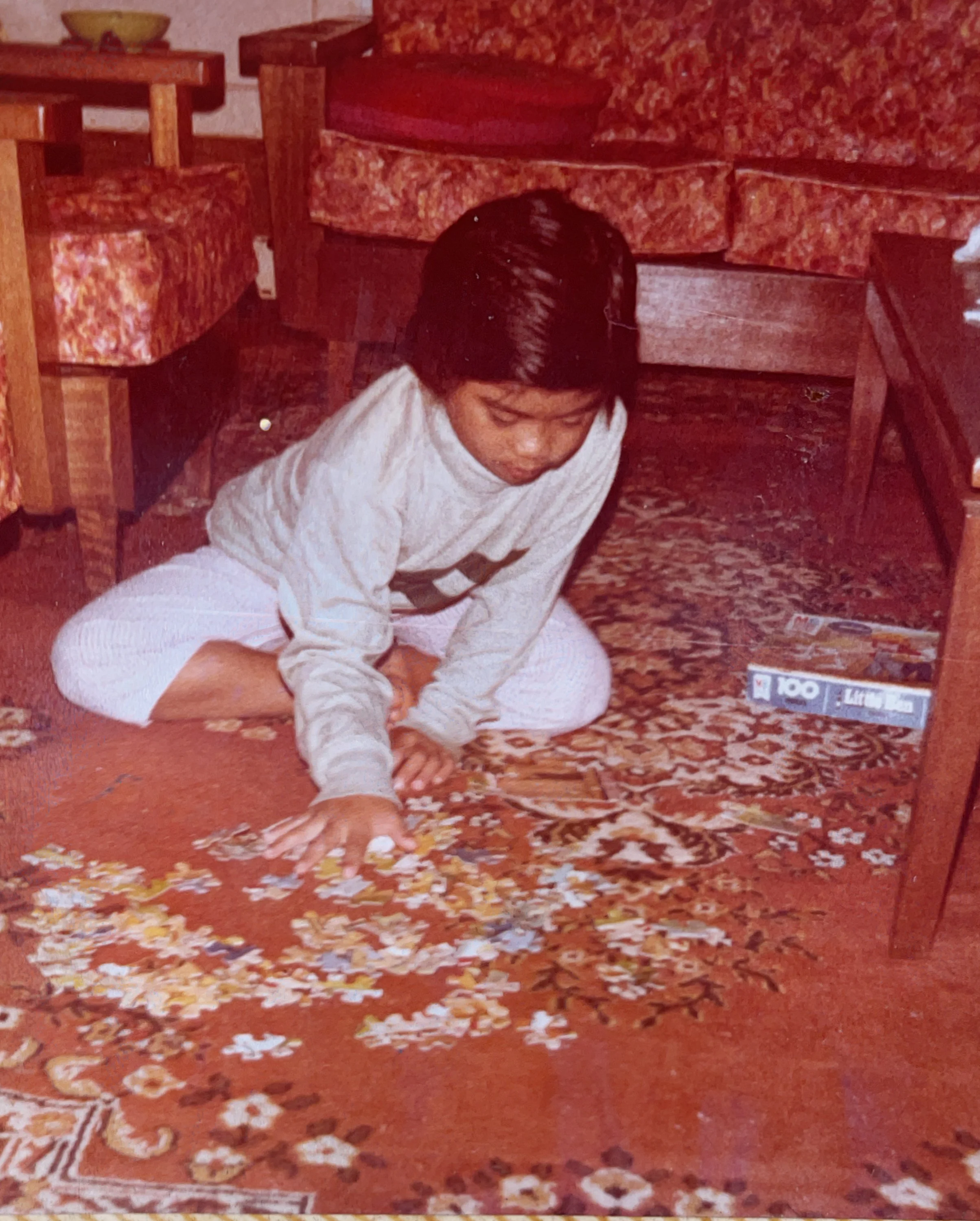
This was my usual play area. Most days you’d find me on this carpet with a puzzle spread out in front of me, completely lost in trying to make all the pieces fit. It also happens to be the same spot where the infamous marble incident I mention below took place.
When I was ten years old, home was a little plantation house on Lānaʻi.
It wasn’t a big house. Less than a thousand square feet, with two small bedrooms opening into the living room and a tiny kitchen just beyond it. The walls were painted a faded shade of blue, chipped in places from years of wear. Along the baseboards were little piles of what I thought was sand until I learned years later that it was termite dust. Red dirt stained the lower corners of the walls near the front door, tracked in after long afternoons outside.
The first thing people noticed was the piano.
My inang baket had bought it for me, and somehow it took up nearly a third of the living room. I still don’t know how we managed to fit it into a house that small, but somehow we did. Against one wall sat an orange vinyl couch with a brown and yellow pattern that could only have come from the 1980s. On hot afternoons my legs would stick to the cushions, and every time I stood up it made a loud farting sound. I laughed every single time.
Most afternoons followed the same routine.
I’d spend hours outside riding my bike or playing with my cousins until it was time to head home. As soon as I walked through the front door, my mom would look up from the stove and ask the same question she asked almost every day.
“Oi, napnapanam?” (Where did you go?)
I still don’t know if she actually forgot where I’d been or if asking had simply become part of her routine.
“Outside playing, with Boyet them” I’d answer.
She’d stir the pot in front of her and reply without looking up.
“Inka agdigosen ta uston ton no maluto daytoy sida.” (Go take a bath. The food will be ready by then.)
Dinner was usually dinengdeng. The vegetables came straight from the garden. Kamote leaves, sitaw, sayote, ampalaya, whatever happened to be ready that week. There was usually fish or pork, and before long the whole house smelled of garlic, onions, and bagoong.
Dad was on the couch watching another John Wayne western. As far as I was concerned, every John Wayne movie was exactly the same. Horses. Dusty little towns. Cowboys wearing hats. My little brother, only two years old then, was usually somewhere nearby, either playing with his toys or sitting beside Dad.
One afternoon I was sitting on the living room floor playing with my glass marbles.
I’d scattered them across the maroon patterned rug without thinking much about it. The colors blended together so well that they almost disappeared. After a while I wandered into the kitchen to grab something to drink, leaving every marble exactly where it was.
As I walked back toward the living room, I saw Dad getting up from the couch.
I opened my mouth to warn him.
I was too late.
His foot landed on the first marble and shot forward. Trying to catch himself, his other foot landed on another one. Suddenly he was sliding across the living room, arms flailing in every direction as he fought to stay on his feet. To ten-year-old me, it looked like he had suddenly joined the Ice Capades.
I laughed so hard I could barely breathe.
Dad answered with a string of Ilocano words I knew enough never to repeat. The moment I realized he was actually upset, my laughter stopped. I stood there waiting for the scolding I was sure was coming.
Instead, he looked down at the marbles, then back at me, shook his head, and said, “Next time don’t leeb your marrrbals derr. Dey look same like da rrrug, no can see you know.” Then he sat back down, picked up the remote, and turned John Wayne back on.
That was it.
A few minutes later Mom called us to the table for dinner, and the whole thing was forgotten. It was just another ordinary afternoon.
Years later, during my first semester of college, our orientation leader asked everyone where they were from. When it was my turn, I smiled and said, “I’m from Hawaiʻi.”
She smiled back. “Oh, so you’re Hawaiian.”
I smiled and replied, “No, I’m Filipino. I was just born and raised there.”
The conversation lasted less than a minute, but I’ve thought about it many times since. Growing up, I never realized there was anything unusual about our home. My mom spoke to me in Ilocano while I answered in English. Dinner came from the backyard as often as it came from the grocery store. John Wayne played in the living room while dinengdeng simmered on the stove. Outside our front door was Hawaiʻi. Inside was the Philippines my parents had carried with them.
To me, they were never two different worlds. They were simply home.
Moving back to Hawaiʻi has made me appreciate the things I once took for granted. I smile when my mom walks into the garden and comes back carrying vegetables that were almost impossible to find while I lived on the mainland. The dishes I grew up eating are now the ones I’ve missed the most, and the sounds drifting through the house still make me feel like I’m ten years old again.
Funny how that happens.
As children, we rarely realize we’re living the memories we’ll one day miss. When I think about home now, I don’t think about an address.
I think about faded blue walls, an oversized piano, and an orange vinyl couch that made fart noises every time I stood up. I think about my mom asking where I’d been, even though she already knew. I think about John Wayne playing in the background while dinengdeng simmered on the stove. And every now and then, I still think about a handful of marbles scattered across a patterned rug and my dad somehow managing to stay on his feet.
Looking back, I don’t think those afternoons taught me what it meant to be Filipino or what it meant to grow up in Hawaiʻi.
They taught me something much simpler.
They taught me what home felt like.
Aloha, agyamanak, and until next time.
— Chex